Where Morocco's most dramatic golden dunes meet ancient Berber traditions and a sky full of stars. From camel treks at sunrise to 4x4 excursions across the Sahara, this is the desert experience you have been dreaming of.
Featured Tour
The 3-Day Marrakech to Merzouga Desert Tour: Camel Rides & Overnights is one of the most highly rated Morocco experiences available, earning 4.9 stars from over 10,000 travellers. This expertly guided journey takes you from the vibrant streets of Marrakech southward through dramatic mountain passes, ancient kasbahs, and sculpted canyon walls before arriving at the legendary Erg Chebbi dunes. Small group sizes ensure a personal, unhurried experience, and every logistical detail — from comfortable air-conditioned transport to a well-placed desert camp with Berber music under the stars — is handled with care. Guests who prefer not to ride camels can travel to the camp by 4x4 at no extra charge, and optional quad biking adds an extra burst of adventure. This is authentic Saharan travel done right.
About the Destination
Tucked against the Algerian border in southeastern Morocco, Merzouga is the gateway to one of North Africa's most spectacular natural wonders. The village itself is small and unhurried, but the dunes that rise behind it are anything but modest.
Merzouga sits at the edge of Erg Chebbi, a sea of wind-sculpted sand dunes that soar up to 150 metres above the surrounding hammada plains. Located in the Drâa-Tafilalet region of Morocco, the area lies roughly 340 kilometres southeast of Fez and about 560 kilometres from Marrakech. The nearest town is Rissani, just 20 kilometres away, while the regional hub of Errachidia is approximately 80 kilometres to the north. Despite its remote position, Merzouga has become one of Morocco's most visited destinations, drawing travellers eager for an authentic Sahara experience.
For centuries, Merzouga and its surrounding oases served as a crucial waypoint on trans-Saharan trade routes, connecting sub-Saharan Africa with the Mediterranean world. Berber nomads, Arab merchants, and Jewish traders all passed through or settled in the region, leaving a rich cultural tapestry that persists today. Ancient ksar (fortified village) architecture, centuries-old Jewish heritage sites, and the living traditions of the Ait Atta Berber tribe reflect this layered history. The Merzouga Jewish tour routes highlight former mellah quarters and synagogues that speak to the area's once-thriving Jewish community.
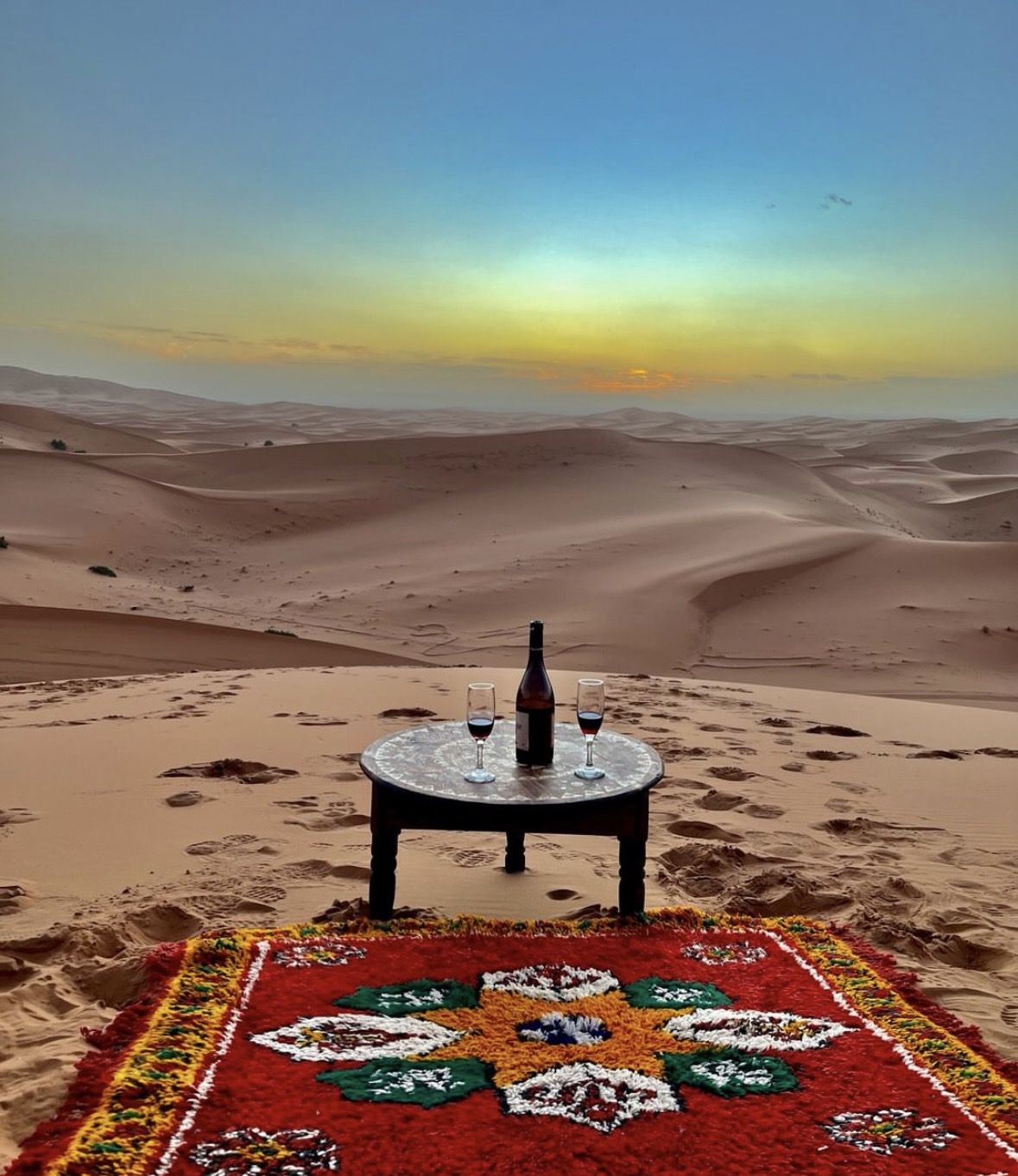
Arriving at the dunes for the first time is a genuinely arresting experience. The sheer scale of Erg Chebbi — stretching roughly 22 kilometres long and 5 kilometres wide — creates a landscape that feels both alien and profoundly beautiful. Visitors typically spend one to three nights here, rising before dawn for a camel trek to a ridge-top viewpoint and staying up late to stargaze under skies free of light pollution. Desert camp dinners feature Moroccan tagines and live Berber music, creating memories that far outlast the journey home.
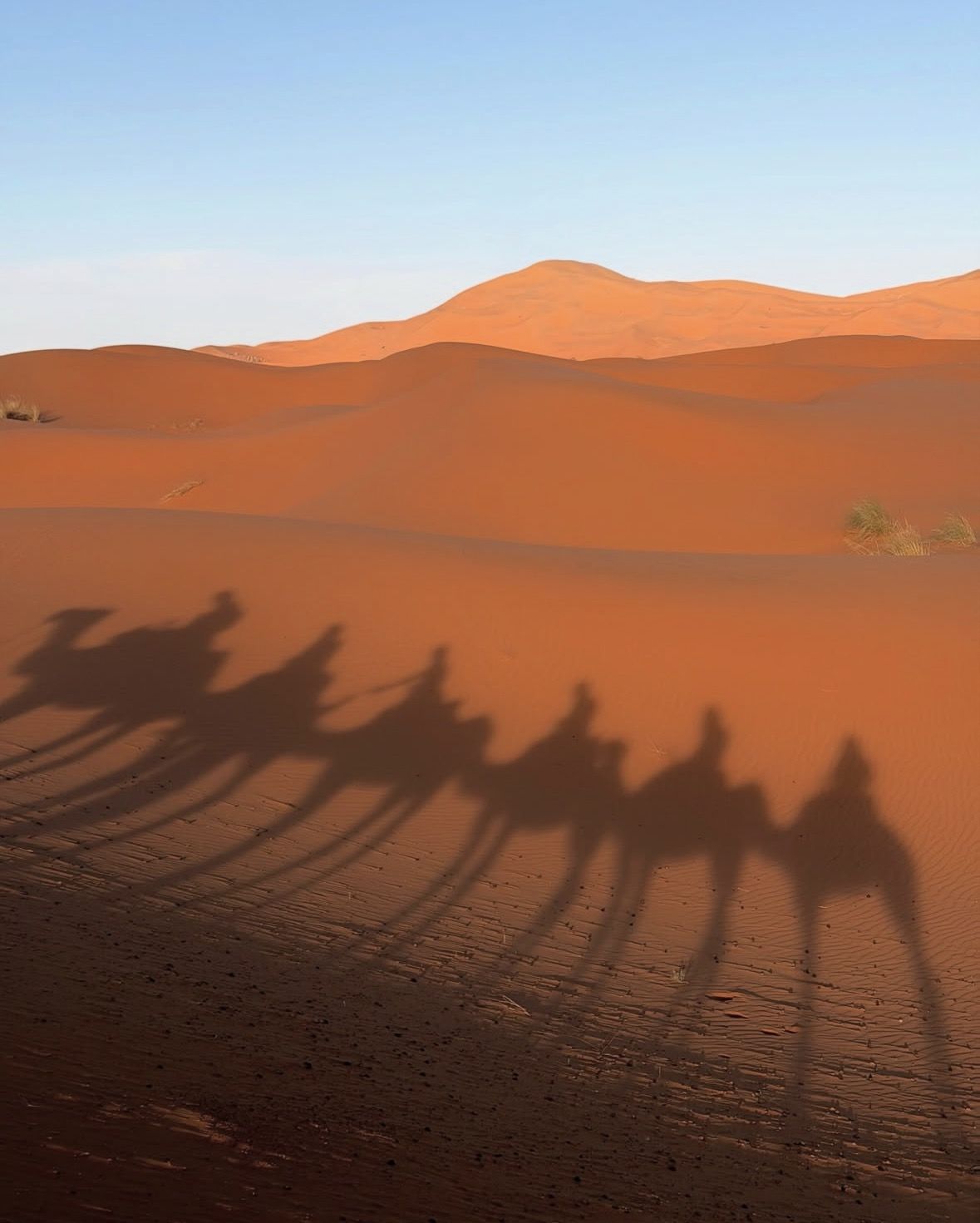
The dunes of Erg Chebbi reach up to 150 metres in height, making them among the tallest in the Sahara. Their deep-orange hue intensifies dramatically at sunrise and sunset, creating world-class photographic conditions.
With virtually no artificial light for dozens of kilometres, the skies above the dunes rank among Morocco's darkest. On clear nights, the Milky Way is visible to the naked eye, making overnight desert camps a favourite among astronomy enthusiasts.
The nearby village of Khamlia, home to the Gnawa people — descendants of sub-Saharan slaves — preserves a powerful musical and spiritual tradition. Visitors can attend authentic Gnawa performances just a short drive from the main dunes.
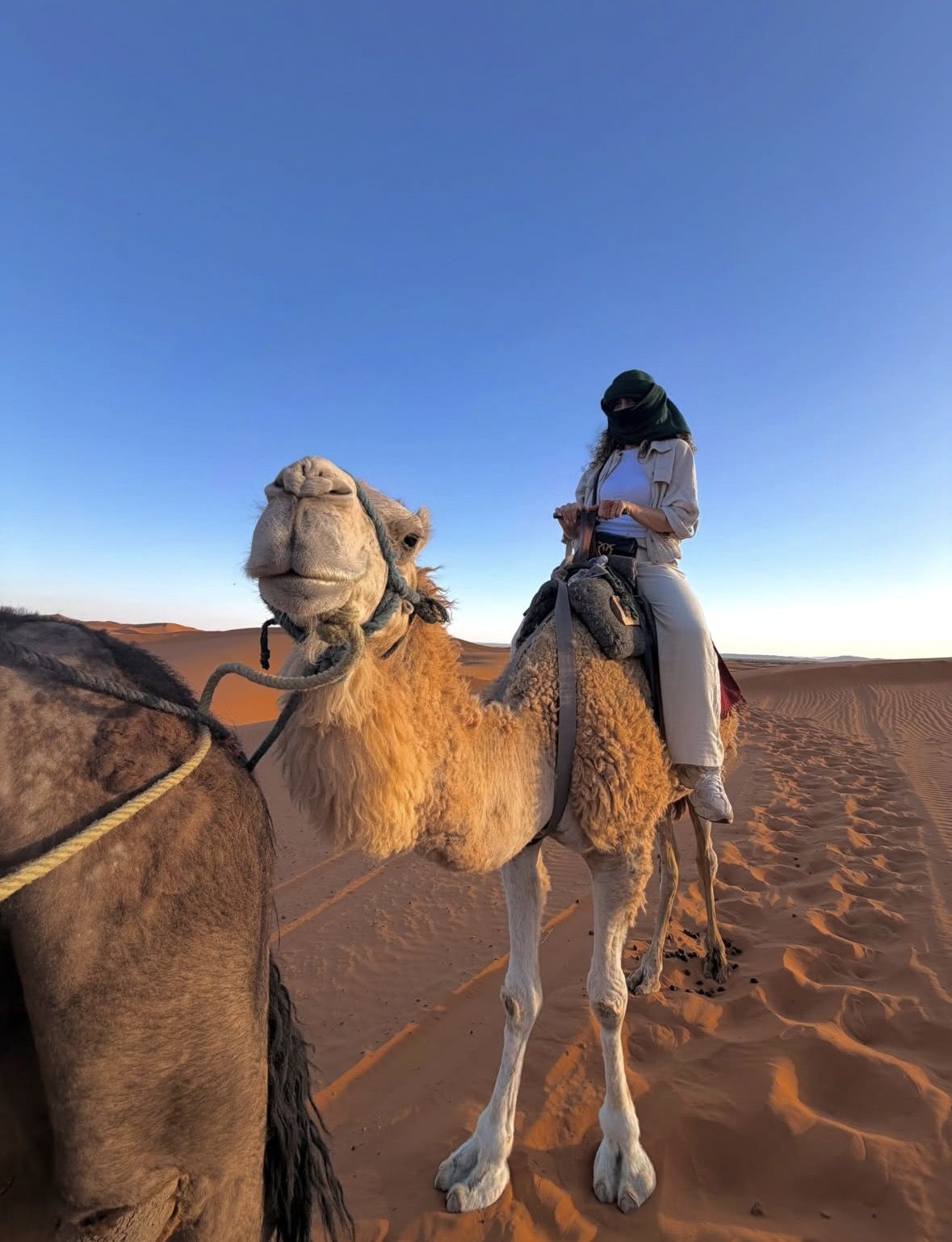
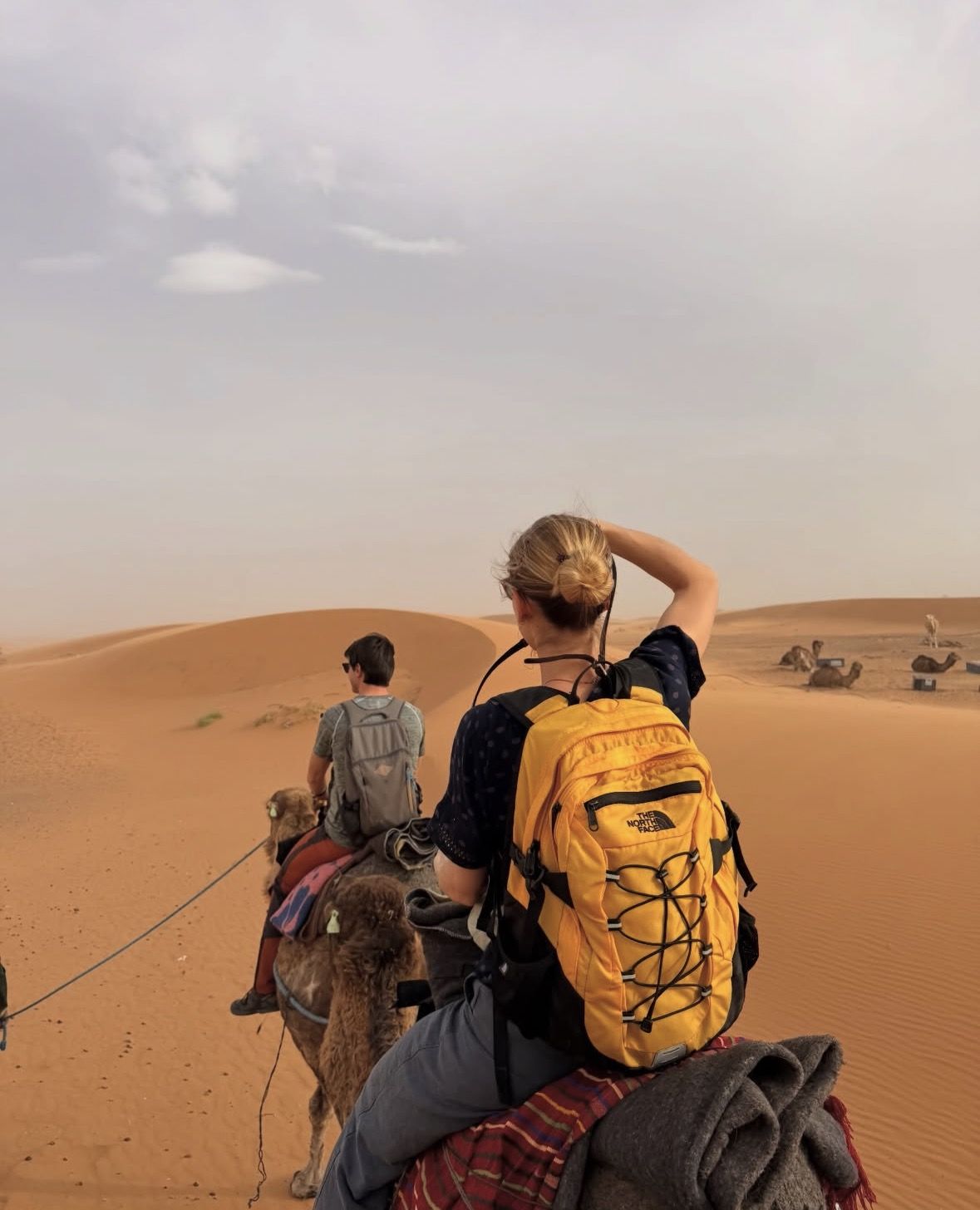
The signature merzouga camel trekking experience typically lasts one to two hours each way, guiding riders over rolling dunes to a high ridge for sunset views. Longer overnight camel rides are also available for deeper immersion.
The region's layered cultural history includes ancient Berber ksour, fossilised trilobite deposits prized since antiquity, and remnants of a once-flourishing Jewish community. Dedicated heritage tours explore these stories in depth.
Despite its arid appearance, the ecosystem around the dunes supports desert foxes, sand vipers, monitor lizards, migratory birds, and dozens of plant species adapted to extreme heat. Early morning walks frequently reward wildlife spotters.
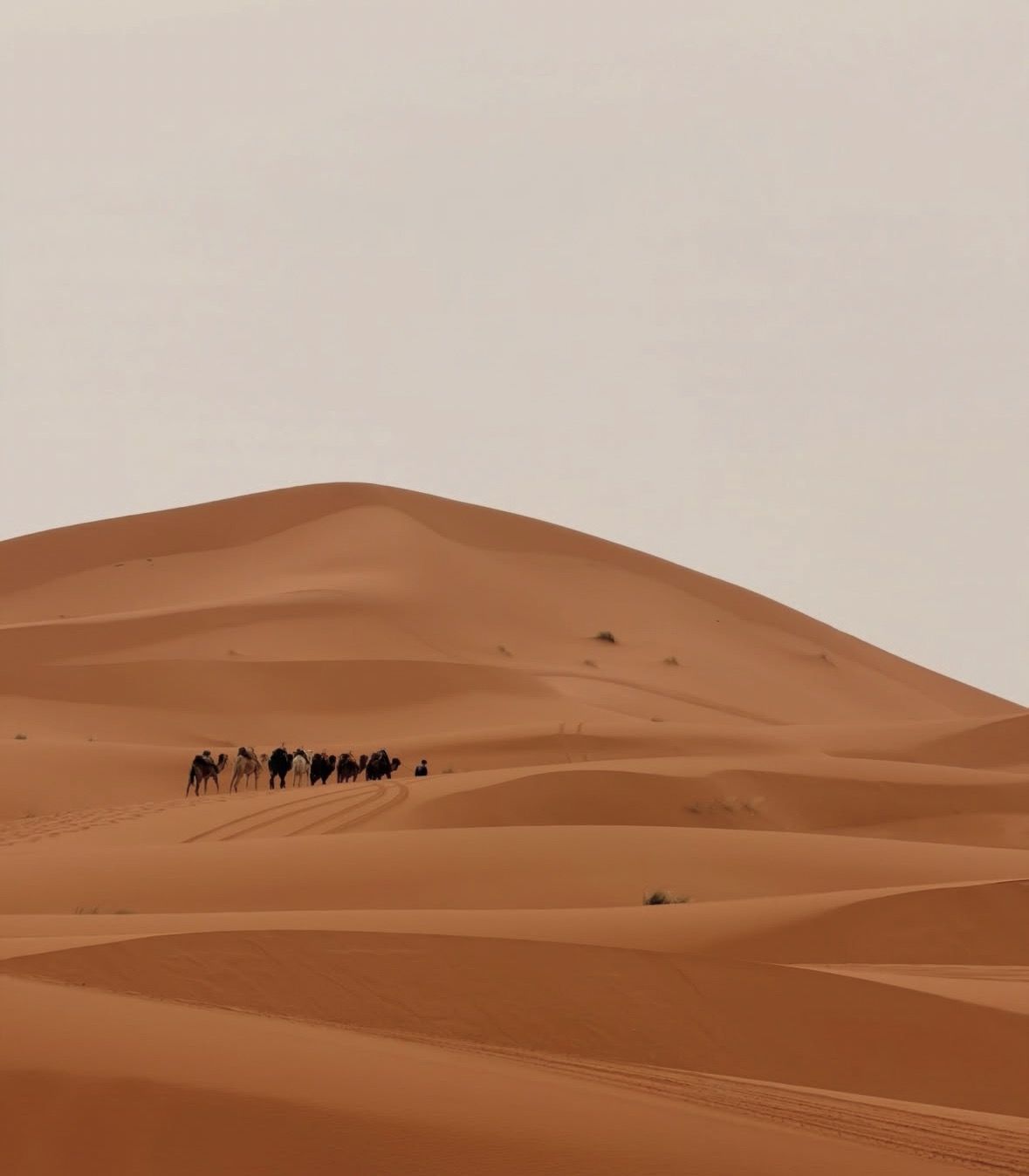
Merzouga camel trekking remains the quintessential desert activity, with routes ranging from a quick one-hour sunset ride to a full overnight camel ride in Merzouga that sees you sleeping under the stars at a remote camp. Guides lead small groups at a gentle pace, timing the trek to catch the best light over the dunes.
A merzouga 4x4 desert excursion unlocks corners of Erg Chebbi inaccessible on foot or camelback, including seasonal salt lakes, nomad encampments, and wind-carved rock formations. Half-day and full-day options are available, often combined with visits to the fossil souks in Rissani.
Thrill-seekers can rent sandboards and carve down the steepest dune faces, or rent a quad bike or dune buggy for a high-speed tour of the sand sea. Operators in Merzouga village supply all equipment and brief riders on safety before heading out.
Merzouga motorcycle tours attract adventure riders looking to explore the surrounding hammada plateau and piste tracks at their own pace. Guided enduro and trail-bike excursions wind through lunar landscapes, dried riverbeds, and remote Berber villages rarely reached by standard tours.
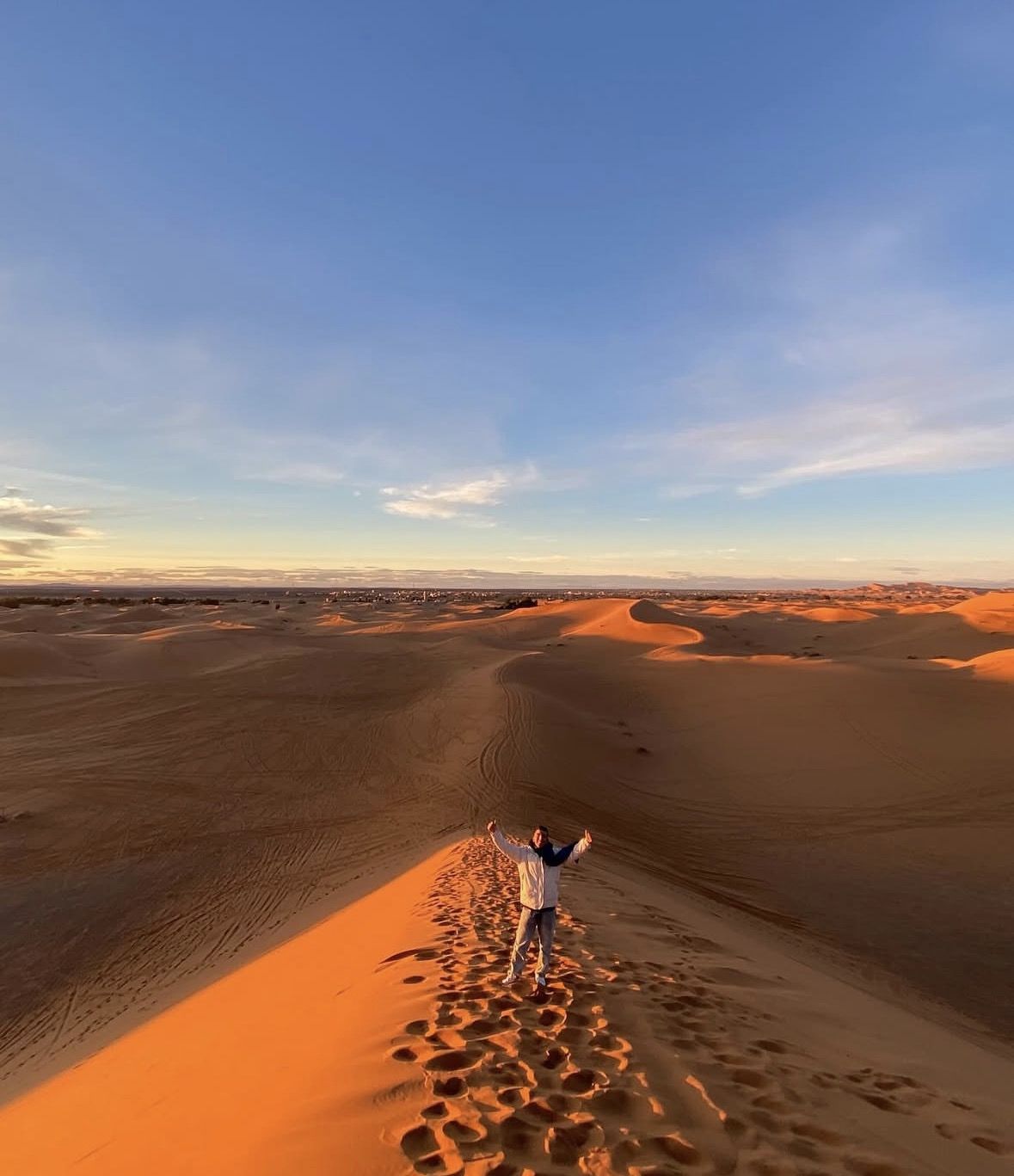
Climbing the main dune ridge under your own steam at dawn or dusk rewards you with panoramic views stretching into Algeria. Many visitors consider this the most peaceful — and most photographed — moment of their entire Morocco trip.
Beyond the dunes, guided cultural excursions cover the Jewish heritage trail (merzouga jewish tour), traditional Berber music evenings in Khamlia, fossil market visits in Rissani, and tea ceremonies with nomadic families. These experiences add depth and context to every itinerary.
Not every desert destination is the same — here is how Erg Chebbi stacks up against the top alternatives.
Choosing the right Sahara destination can feel overwhelming, especially when multiple countries offer dune experiences that look similar in photographs. The Merzouga Desert stands apart in several meaningful ways, but travellers should weigh factors like accessibility, crowd levels, price point, and cultural depth before committing. This comparison table places it alongside three well-known alternatives — Douz in Tunisia, Merzouga's Moroccan rival Zagora, and the Erg Chebbi-adjacent Erg Chigaga — to help you make a confident, informed decision.
| Crowds | Price | Best For | What Sets It Apart | |
|---|---|---|---|---|
| ★ Merzouga Desert | Moderate — busy in peak season but manageable with early starts | Mid-range; budget camps from €30, luxury from €150+ per night | First-time Sahara visitors, photographers, families, culture lovers | Tallest dunes in Morocco (150 m), rich Berber & Jewish heritage, excellent tour infrastructure |
| Zagora, Morocco | Lower crowds year-round, quieter atmosphere | Slightly cheaper on average; fewer luxury options | Travellers on tighter budgets or shorter itineraries from Marrakech | Closer to Marrakech, but dunes (Erg Chegaga nearby) are smaller and less dramatic |
| Erg Chigaga, Morocco | Very low — one of Morocco's most remote and least-visited dune fields | Higher cost due to long 4x4 transfer (3–4 hrs from Zagora) | Adventurous travellers seeking true solitude and raw desert wilderness | Vast, pristine dunes with almost no other tourists; requires more planning and budget |
| Douz, Tunisia | Moderate; popular with European package tourists | Comparable to Merzouga; all-inclusive packages widely available | Travellers visiting Tunisia who want a desert add-on | Gateway to Tunisia's Sahara but dunes are less towering; different cultural flavour |
Each destination has its own appeal, but the Merzouga Desert consistently wins on the combination of dune drama, cultural richness, and tour accessibility. The 150-metre Erg Chebbi dunes simply outclass most regional alternatives visually, while the surrounding Berber villages, Jewish heritage trails, and Gnawa music scene add layers of meaning that pure sand destinations cannot match. For most travellers, it remains the definitive Saharan experience in North Africa.
Travel Guide
Everything you need to know to plan a seamless and memorable trip to the Sahara.
Most travellers reach the dunes via guided road tours departing from Marrakech or Fez — the most popular approach given the spectacular scenery en route. A marrakech to merzouga desert tour typically takes two days of driving (overnight stop included), passing through Aït Benhaddou, the Dadès Gorge, and the Drâa Valley. A tour from casablanca to merzouga adds roughly two to three hours to the Marrakech departure time. Alternatively, you can fly into Errachidia Airport (ERH) and transfer by road.
Once in Merzouga village, most tour operators provide transfers between your riad or guesthouse and the dune edge. Camels, 4x4 vehicles, quad bikes, and motorcycles are all available for hire locally. The main cluster of camps and hotels sits right at the foot of Erg Chebbi, so most points of interest are within a few kilometres. Shared taxis (grands taxis) connect Merzouga to Rissani and Errachidia for onward travel.
The ideal windows for visiting are spring (March to May) and autumn (September to November), when daytime temperatures sit between 20°C and 30°C — warm enough to enjoy outdoor activities without the punishing heat of summer. Nights remain pleasantly cool in both seasons, perfect for campfire evenings and stargazing. These months also coincide with Morocco's broader peak travel season, so booking tours and camps a few weeks in advance is strongly recommended.
Summer (June–August) sees temperatures routinely exceeding 40°C, sometimes reaching 45–50°C at midday — a genuinely dangerous heat for outdoor activities without careful precaution. Winter (December–February) brings dramatically cooler days (15–22°C) and cold nights that can drop near freezing, but dune colours are vivid and crowds are thin. Sandstorms (chergui winds) can occur in any season but are most common in spring; they pass quickly and are part of the authentic Sahara experience.
Packing smart makes an enormous difference in the desert. Layers are essential — mornings and evenings can be cold even in summer, while midday heat demands breathable, sun-protective fabrics. A high-quality headscarf or Berber-style turban is both practical and culturally respectful, shielding your face from sun and blowing sand. Comfortable closed-toe shoes are fine for camel rides; sandals clog with sand quickly and are better reserved for camp use.
Sun protection is your single most important investment. The desert UV index regularly hits 10–11, making high-SPF sunscreen, UV-blocking sunglasses, and a wide-brimmed hat non-negotiable. Pack a quality headlamp for navigating camp at night and a portable power bank for charging devices away from mains power. If you plan a merzouga 4x4 desert excursion or motorcycle tour, a bandana or dust mask will be invaluable on piste tracks.
Merzouga sits at the heart of Berber Morocco, and a little cultural awareness goes a long way. Dress modestly outside your desert camp — shoulders and knees covered shows respect in the village. Always ask permission before photographing local people, especially women and children. Accepting a glass of sweet mint tea when offered is considered polite; refusing without explanation can cause mild offence. Learning a few words of Tamazight or Darija Arabic (hello: 'salaam', thank you: 'shukran') delights locals enormously.
Haggling is expected in the village market and with independent camel guides, but stay good-humoured — aggressive bargaining is frowned upon. Carry small denomination dirhams for tips; tipping camel guides, camp staff, and drivers is appreciated and customary (20–50 MAD per person is reasonable). ATMs exist in Rissani but not reliably in Merzouga village itself — withdraw cash before you arrive. Most camps and hotels do not accept cards, so dirhams are essential throughout your stay.
No special vaccinations are required for Morocco, but it is wise to ensure your routine jabs (tetanus, hepatitis A, typhoid) are up to date before travelling. Heat-related illness is the primary health risk — drink at least three litres of water per day, take rest breaks in the shade during midday hours, and watch for signs of heat exhaustion (dizziness, nausea, rapid heartbeat). Carry oral rehydration sachets in your bag as a precaution. Travel insurance that covers remote desert evacuations is strongly recommended.
The desert is generally very safe for tourists, but a few practical precautions matter. Never walk into the dunes alone at night without a guide — disorientation in the dark is surprisingly easy even close to camp. Scorpions and sand vipers are present but rarely encountered; always shake out shoes before putting them on. Keep your accommodation and camp operator's phone number saved offline. The nearest hospital is in Errachidia (80 km north); Rissani has a basic clinic for minor issues.
Explore More
Extend your adventure beyond the dunes and discover the spectacular landscapes, ancient cities, and hidden valleys that surround the Sahara's gateway.

The 3-Day Marrakech to Merzouga Desert Tour: Camel Rides & Overnights is one of the most highly rated Morocco experiences available, earning 4.9 stars from over 10,000 travellers.
Check this tour →
The Merzouga Desert – Camel Ride & Overnight in the Camp is your gateway to the authentic Sahara.
Check this tour →
The Camel Trekking & 1 Night in Merzouga Desert Camp is widely regarded as Morocco's most unforgettable overnight desert experience.
Check this tour →
The 3 days Merzouga Desert trip from Marrakech is the ultimate way to experience Morocco's most breathtaking landscapes in a single, seamlessly guided adventure.
Check this tour →
The From Marrakech: 3-Day Desert Tour to Merzouga with Food and Camel is the perfect way to experience Morocco's most iconic landscapes without the hassle of planning.
Check this tour →
The BEST 3 Days Desert Tour From Marrakech to Merzouga _ Luxury Camp is a carefully crafted small-group journey that takes you through Morocco's most spectacular landscapes.
Check this tour →
The Marrakech to Merzouga: 4 Day Adventure with 2 Nights in Desert is a handcrafted journey designed to immerse you in Morocco's most breathtaking landscapes and living cultures.
Check this tour →Traveler Reviews
Discover what travelers are saying about their unforgettable experiences in the Merzouga Desert.
"Booking the 4 days tour from Marrakech to Merzouga was the best decision of our entire Morocco trip. The journey through the Atlas Mountains and Draa Valley was stunning, but nothing prepared us for the moment we saw the Erg Chebbi dunes rising out of nowhere. Our overnight camel ride in Merzouga at sunset was pure magic — the silence and colors were unlike anything I've ever experienced. The desert camp had comfortable beds, delicious tagine, and incredible stargazing. Absolutely life-changing."
"We chose the 5 days tour from Marrakech to Merzouga and every single day brought something new and breathtaking. Our guide Mohammed was knowledgeable, funny, and genuinely passionate about sharing Berber culture with us. The Gnawa music session in Khamlia village gave me goosebumps, and watching the sunrise from the top of a golden dune was a moment I'll carry forever. Highly recommend adding extra days so you don't feel rushed."
"We did the 3-day desert tour from Marrakech to Merzouga and found it to be a great introduction to the Sahara, though I'd suggest at least one more day if your schedule allows. The merzouga camel trekking experience was a highlight — swaying gently over the dunes at dusk is something you simply can't replicate anywhere else. The camp was cozy and the food was wonderful. The drive back through Todgha Gorge was a fantastic bonus we hadn't expected."
"Our tour from Fez to Merzouga took us through some of Morocco's most dramatic and varied landscapes — cedar forests, ancient kasbahs, and endless palm oases. Arriving at the dunes after such a rich journey made the experience feel truly earned. The luxury camp we stayed in was surprisingly plush, with private tents, lantern lighting, and a live music performance under the stars. I cannot imagine a more romantic or awe-inspiring trip."
"I'm a motorbike enthusiast, and the Merzouga motorcycle tours exceeded every expectation I had. Riding through piste tracks between the dunes, stopping at remote Berber villages, and camping out in the open Sahara felt like a true adventure from another era. The organizers provided excellent safety briefings and well-maintained bikes. If you love riding and crave something genuinely off the beaten path, this is your trip."
"We came all the way from Casablanca and booked the tour from Casablanca to Merzouga, which is a long drive but absolutely worth it. The Merzouga 4x4 desert excursion on our second day was thrilling — flying over sand ridges and exploring hidden oases that no camel could easily reach. The only small downside was that our standard camp was a bit crowded on a busy weekend, so I'd recommend booking a private or luxury camp in advance. Overall a fantastic experience."
"The Merzouga Jewish tour was a fascinating and deeply moving addition to our desert visit, something we hadn't planned but stumbled upon through our guide. We visited ancient synagogues and Jewish mellah neighborhoods in nearby towns, learning about the centuries-old Sephardic communities that once thrived in southern Morocco. Combined with the grandeur of the Erg Chebbi dunes, this cultural depth made our trip feel genuinely educational. I left with a much richer understanding of Morocco's diverse heritage."
"The overnight camel ride in Merzouga was the single most memorable experience of my 30 years of travel — and that's saying a lot. Watching the Milky Way stretch across a completely dark sky, with only the sound of wind over sand, was profoundly humbling. Our Berber guide sang traditional songs around the campfire, and breakfast at sunrise on top of a dune was worth every early alarm. I'm already planning a return visit and will be booking the marrakech to merzouga tour again without hesitation."
Watch Before You Go
Experience the golden dunes, camel silhouettes, and star-filled Sahara nights through the eyes of fellow travellers before you even pack your bag.
Location
Merzouga village is located at the base of Erg Chebbi in the Drâa-Tafilalet region of southeastern Morocco, approximately 80 km south of Errachidia and 20 km east of Rissani on Route Nationale 13.
FAQ
Everything you need to know before planning your trip to this legendary corner of the Sahara.
Ready to walk on golden dunes and sleep under a billion stars?
Book Your Tour NowDiscover More
For millennia, Merzouga was a lifeline on the trans-Saharan caravan routes, where Berber nomads, Arab scholars, and Jewish merchants exchanged gold, salt, and ideas beneath the same dunes travellers climb today. The fossilised sea creatures embedded in local rocks tell an even older story — 400 million years ago, this desert was an ocean floor.