Nestled at the edge of the Moroccan Sahara, Merzouga's towering Erg Chebbi dunes have witnessed the footsteps of trans-Saharan traders, nomadic Berber clans, and modern-day adventurers alike. Behind every ripple of golden sand lies a story thousands of years in the making.
The region surrounding Merzouga has been inhabited and traversed for millennia, with archaeological evidence pointing to human presence in the broader Saharan corridor dating back at least 10,000 years — a time when the desert was far greener and more hospitable. Rock carvings and petroglyphs discovered across the Draa Valley and southeastern Morocco depict elephants, crocodiles, and cattle, confirming that a wet savannah once blanketed this landscape. As desertification accelerated around 3000 BCE, communities adapted, gradually giving rise to the resilient nomadic and semi-nomadic Berber cultures that would come to define the Saharan frontier for centuries to come.
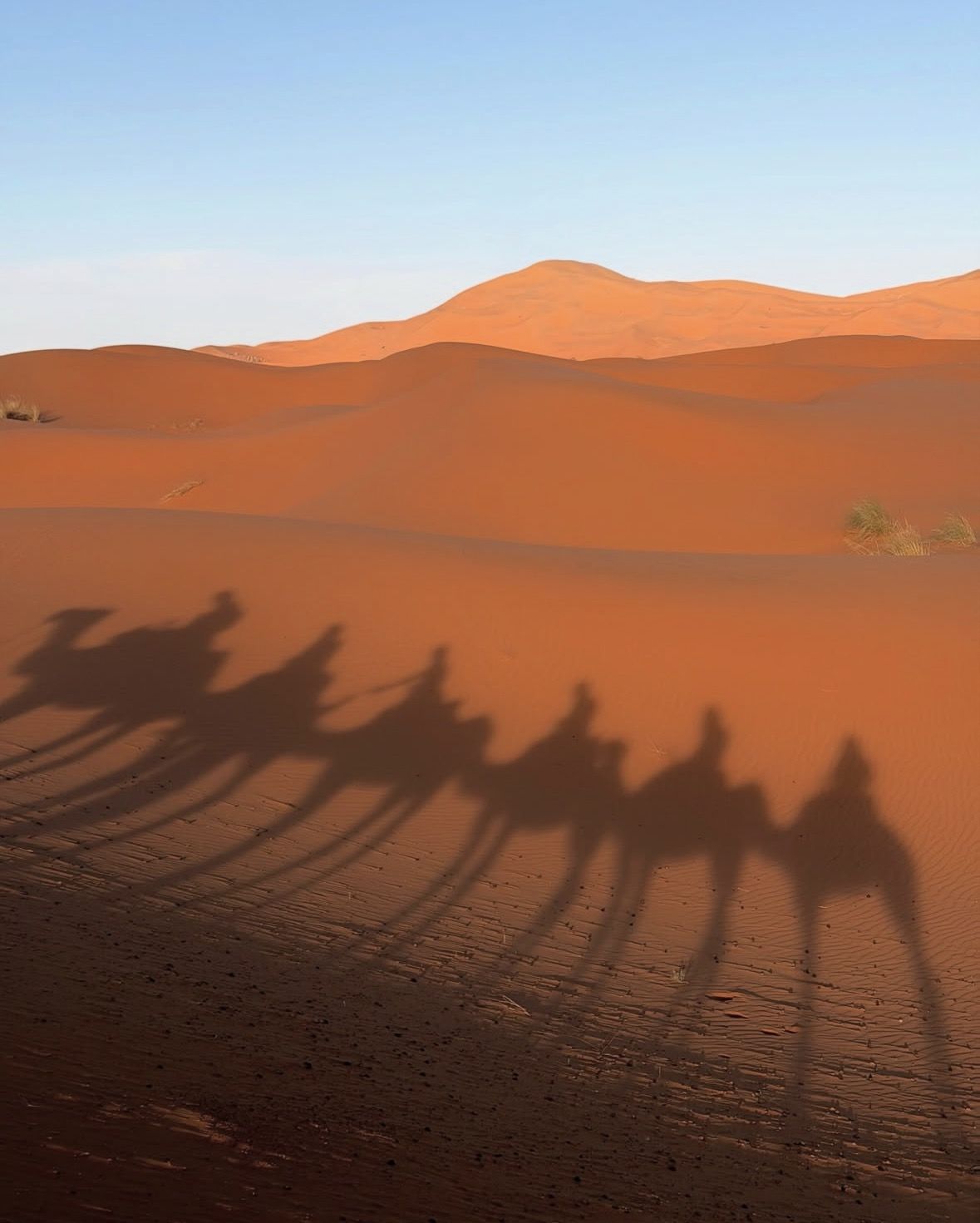
By the first millennium CE, the area that includes modern-day Merzouga had emerged as a critical waypoint along the trans-Saharan trade network. Gold, salt, ivory, and enslaved people were carried by camel caravans from sub-Saharan Africa northward through the Tafilalet region — of which Merzouga is a part — toward the great imperial cities of Fez and Marrakech. The Tafilalet oasis, one of the largest in the Sahara, provided water and sustenance that made these perilous journeys survivable. Merzouga's strategic position at the foot of the magnificent Erg Chebbi dune field made it an unmistakable landmark for caravan leaders navigating by stars and sand.
The indigenous Amazigh (Berber) people — particularly the Ait Khebbach tribe — have inhabited the Merzouga region for generations, developing a culture exquisitely adapted to desert life. Their knowledge of the dunes, seasonal winds, and underground water sources was not merely practical but deeply spiritual, woven into oral poetry, music, and ritual. The Gnawa musical tradition, brought northward by sub-Saharan Africans who travelled the caravan routes, also took root here, blending with local Berber expression to create a vibrant cultural tapestry still celebrated at festivals today. This fusion of peoples and traditions gave Merzouga an identity as diverse as the sands that surround it.
The legendary camel caravans that passed through Merzouga were not simply commercial enterprises — they were mobile communities carrying languages, religions, and ideas across thousands of kilometres of hostile terrain. The rise of the Moroccan Alaoui dynasty in the 17th century, which traces its origins to the Tafilalet region, further elevated the significance of this desert corridor. The town of Rissani, just 22 kilometres from Merzouga, served as the historical capital of the Tafilalet, housing the tomb of Moulay Ali Cherif, ancestor of Morocco's current royal family. This royal lineage cast a long historical shadow over the Merzouga region, lending it prestige beyond its modest size.
Erg Chebbi itself — the dramatic sea of dunes that defines Merzouga — is a product of geological forces spanning tens of thousands of years. Wind-driven sand originating from the Algerian plateau accumulated against a natural rocky ridge, creating a dune field stretching approximately 22 kilometres in length and up to 5 kilometres in width, with individual dunes soaring to heights of 150 metres. Unlike the vast Algerian ergs to the east, Erg Chebbi is compact and intensely dramatic, its apricot and crimson tones shifting with the arc of the sun. Local Berber legend holds that the dunes were created by God as divine punishment upon an uncharitable village, burying it beneath an ocean of sand.
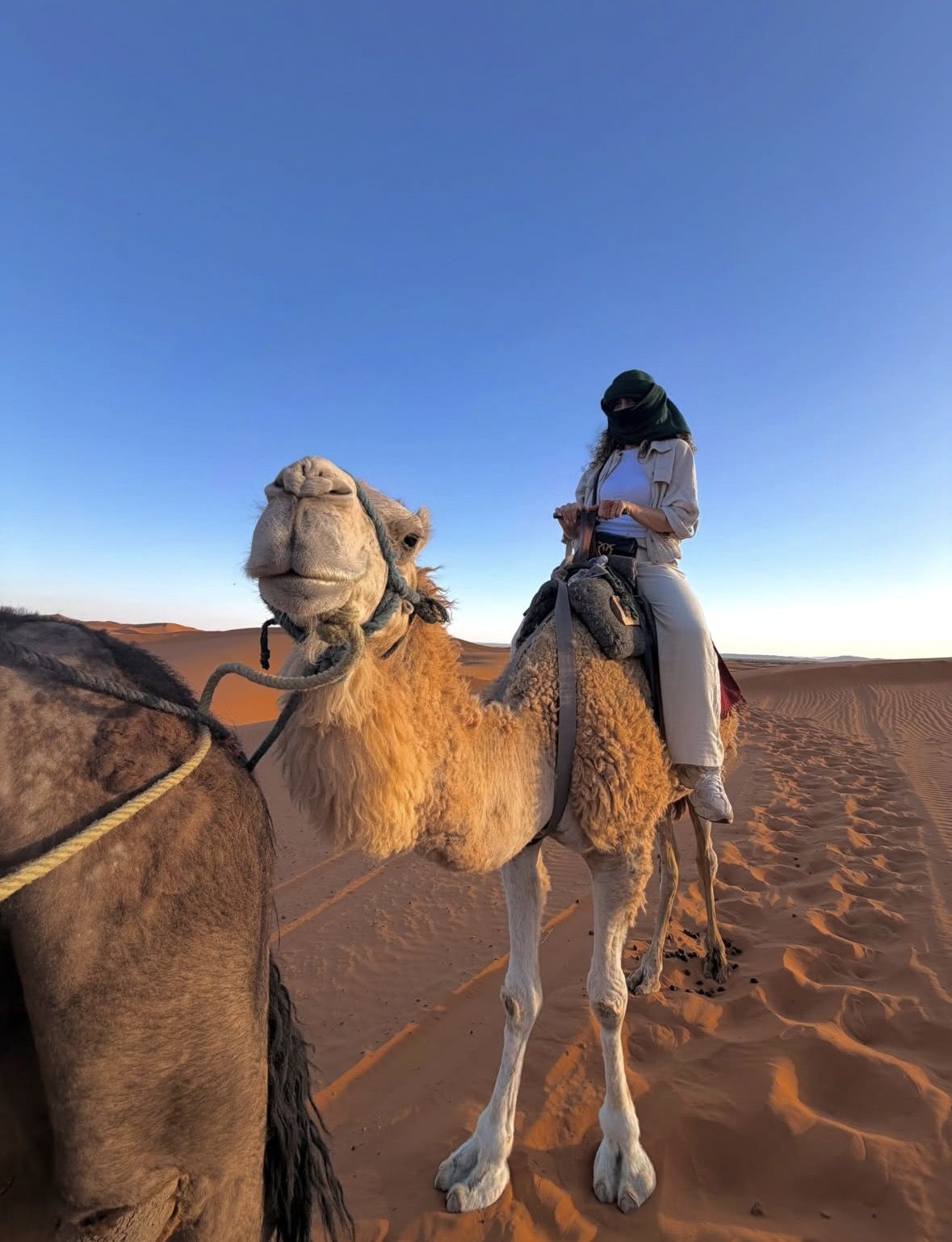
For most of the 20th century, Merzouga remained an obscure desert hamlet known primarily to the Ait Khebbach Berbers and occasional French colonial administrators who mapped Morocco's southeast. The country's independence in 1956 brought new infrastructure priorities, and the paved road connecting Merzouga to the regional centre of Errachidia was not completed until the 1980s. That ribbon of tarmac changed everything. Adventurous travellers — initially European overlanders crossing Africa by four-wheel-drive — began arriving in earnest, drawn by the photogenic immensity of Erg Chebbi and the promise of an authentic Saharan experience accessible without venturing into politically complex Algeria or Libya.
Throughout the 1990s, word spread rapidly among backpackers and tour operators that Merzouga offered what many considered the most accessible and visually spectacular dune experience in all of North Africa. Small family-run auberges began to dot the desert edge, offering camel treks, overnight stays in nomadic-style tents, and the unforgettable spectacle of Saharan sunrises. Morocco's tourism ministry recognised the region's potential and began investing in road improvements and tourism infrastructure around the turn of the millennium. By the early 2000s, Merzouga had firmly established itself on the itinerary of Morocco's classic imperial-city-and-desert circuit, attracting hundreds of thousands of visitors annually.
The Dakar Rally — one of the world's most gruelling motorsport events — routed through the Merzouga region multiple times during its African era, broadcasting images of Erg Chebbi's majestic dunes to a global television audience of millions. Though the rally relocated to South America in 2009 for security reasons, its legacy endured in the form of the Morocco Desert Race and other regional off-road events that continue to use the Saharan southeast as their dramatic backdrop. This motorsport heritage added another layer to Merzouga's international profile, attracting enthusiasts who might otherwise never have discovered its historical and cultural depth.
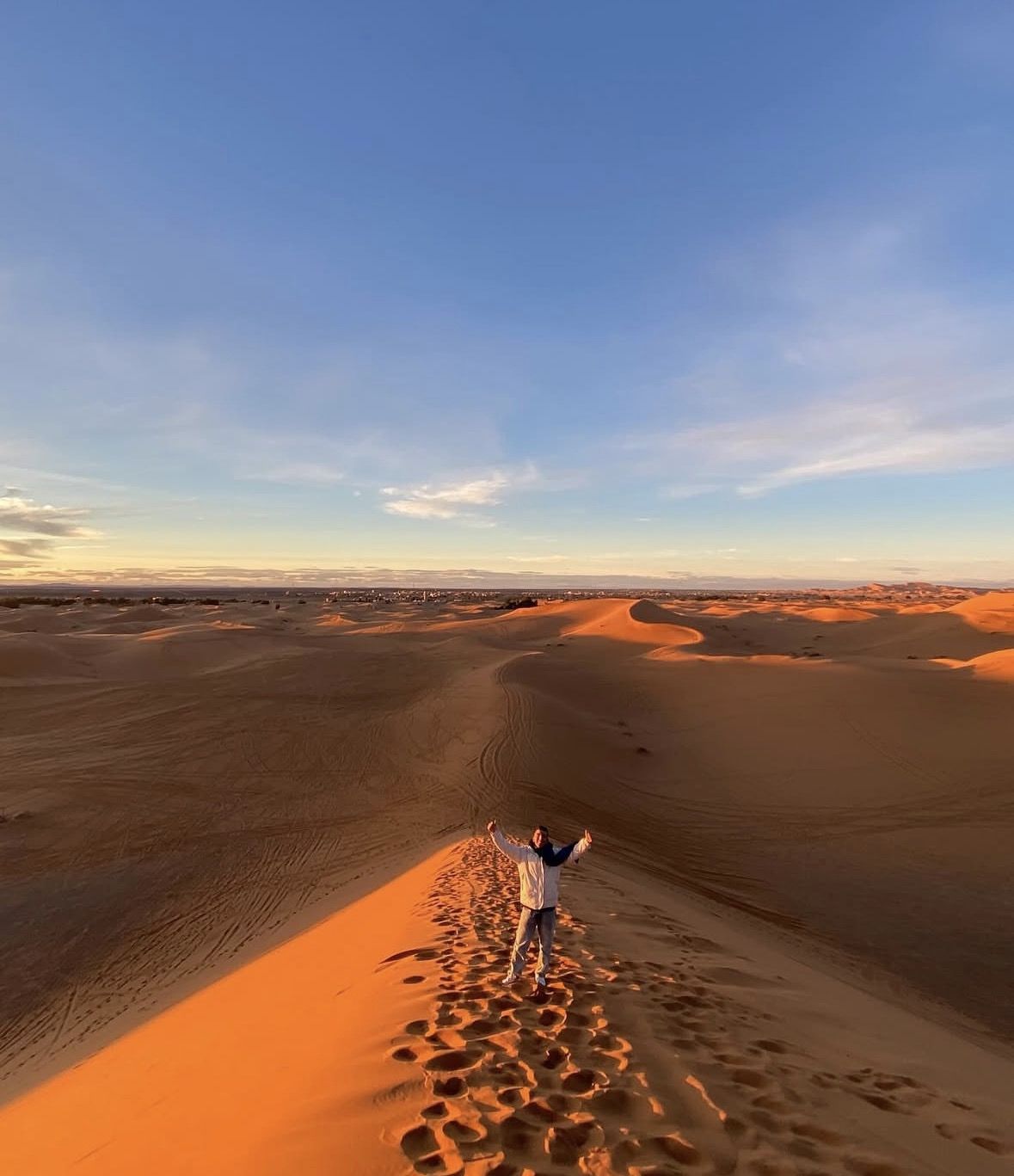
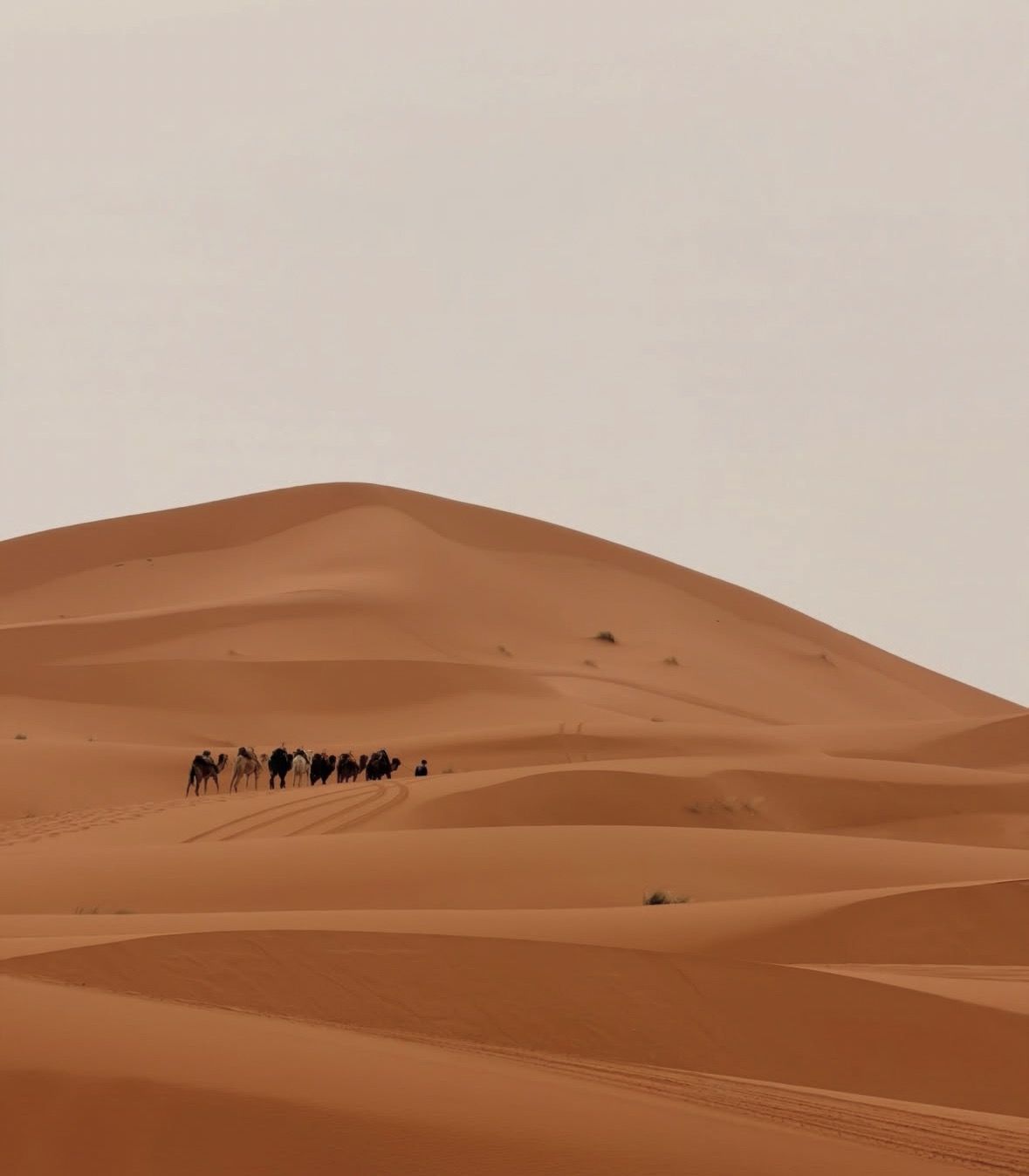
Today, Merzouga functions as the undisputed gateway to Morocco's Saharan experience, welcoming visitors from every corner of the globe who seek both adventure and cultural immersion. The village itself remains small and characterful, its low-rise mud-brick architecture harmonising with the surrounding landscape. The Ait Khebbach Berbers continue to live in and around the dunes, many now working as guides, musicians, and hosts while maintaining deep ancestral connections to the desert. Camel trekking across Erg Chebbi at sunset remains the iconic activity, but travellers now also access sandboarding, quad biking, stargazing sessions, and visits to the nearby Dayet Srij flamingo lake.
Merzouga is more than a destination — it is an encounter with deep time, where ancient geology, centuries of trade, and living Berber culture converge beneath an immense Saharan sky. Whether you spend a single night in a luxury desert camp listening to Gnawa drums echo across the dunes, or linger for days exploring the Tafilalet's crumbling ksars and palmeries, the experience leaves an indelible mark. Travellers who stand atop Erg Chebbi's highest ridge at dawn, watching the sand ignite in shades of orange and rose, invariably describe it as one of the most profound moments of their lives. The Sahara has been drawing people here for millennia — and it shows absolutely no sign of stopping.
Ready to Experience It Yourself?
Don't let Erg Chebbi's golden dunes remain a dream — expert-guided tours from Marrakech and Fez make reaching Merzouga easier than ever, with camel treks, luxury desert camps, and cultural experiences all expertly arranged for you. Whether you're a solo traveller, a couple seeking romance under the stars, or a family craving unforgettable memories, there is a perfectly crafted Merzouga itinerary waiting for you. Browse our handpicked desert tours today and take the first step toward your own chapter in this ancient Saharan story.
Book Your Tour Now